
Cotton Mills and the Industrial Revolution
The Industrial Revolution marked a pivotal era of growth and transformation, particularly in the cotton industry. This blog post embarks on a comprehensive exploration of the profound changes brought about by cotton mills during this time. Covering the evolution of cities from small townships to bustling metropolises, understanding the ominous link between slavery and economic growth, and delving into industrial innovations like the cotton gin, it illuminates the intricate tapestry of production, poverty, and protest. Moreover, it examines the intensifying growth during the age of reform and the globalization of traditional industries, leading to scenarios like the cotton famine and the emergence of warehouse cities. A closer look at these developments and an array of historical insights are provided to create a full picture of the cotton industry’s indelible impact on society during the Industrial Revolution.
From small-time township to sprawling metropolis: a visual tour
The transformation from quaint townships to the booming, industrially energized metropolises marks one of the most dramatic changes of the Industrial Revolution. In a relatively short span of time, new technologies and economic opportunities spurred a migration of people from rural landscapes to urban settings. This urbanization laid the foundation for cities that could support burgeoning industries, not least of which was cotton textiles.
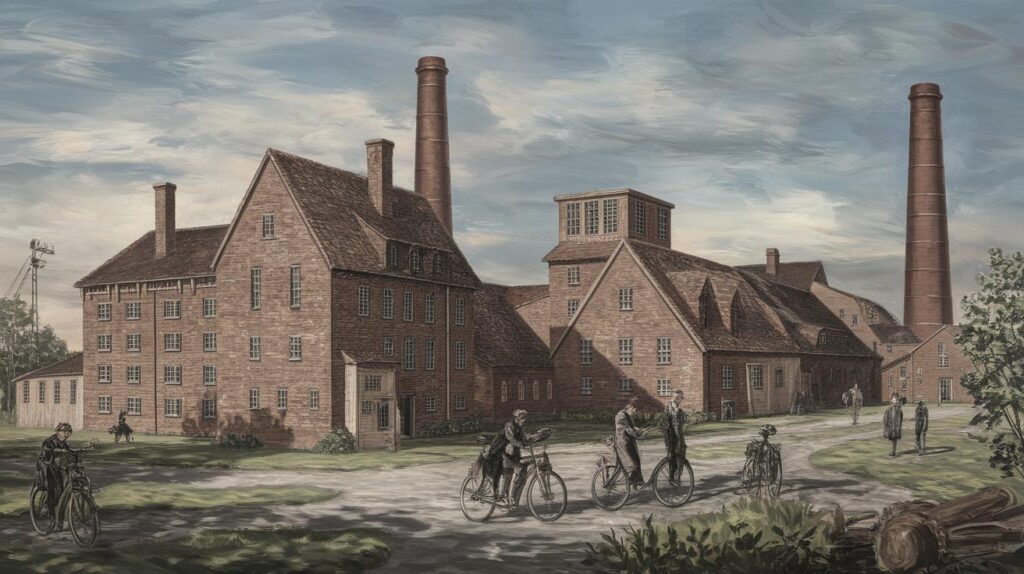
The architecture of these growing cities was shaped out of necessity and innovative design strategies to accommodate the swelling populations and facilitate industrial operations. Brick factories and towering smokestacks became woven into the city’s skyline, while expanding railways and canals enabled efficient distribution networks that connected these urban centers with wider markets.
Cottonopolis
The term “Cottonopolis” epitomizes cities like Manchester that became hubs of the cotton industry. During the Industrial Revolution, Manchester emerged as the heart of cotton processing, thanks to its strategic location, skilled workforce, and access to water power. This city became synonymous with textile production, earning it not only economic prowess but also a central place in the socio-economic narratives of the era.
Manchester’s rise to prominence was largely due to its comprehensive infrastructure and innovation-friendly environment, which attracted entrepreneurs and industrialists. The concentration of technology, such as mechanized spinning and weaving processes, propelled the city’s growth and set a blueprint for industrial expansion globally.
How important was slavery to Manchester’s growth?
A crucial yet dark chapter in the history of Manchester’s development is its link to the transatlantic slave trade. The raw cotton fueling Manchester’s mills was sourced largely from slave-dependent plantations in the American South, intertwining the city’s industrial success with the exploitation occurring thousands of miles away. This economic dependency highlights a moral complexity in the story of Manchester’s rise.
Despite anti-slavery sentiments circulating during the 19th century, the grim reality was that the wealth and prosperity of Manchester were inherently tied to a system of abhorrent human rights abuses. The wealth generated from this cotton industry not only shaped local economies but also frequently perpetuated the very system of slavery through continuous demand for cheap raw materials.
The mill and the gin
Two key innovations drove the cotton industry’s expansion during the Industrial Revolution: the power-driven cotton mill and the cotton gin. The introduction of mechanized spinning and weaving in mills allowed for mass production of cotton textiles, significantly reducing costs and labor intensity, and exponentially increasing output. These mills quickly became the backbone of the industrial workforce and urban economy.
In tandem, Eli Whitney’s invention of the cotton gin in 1793 revolutionized the processing of raw cotton by greatly speeding up the removal of seeds from cotton fiber. This evolution not only boosted efficiency on cotton plantations but also created a direct supply chain to mills focused on mass textile production. Together, the mill and gin facilitated unprecedented industrial growth.
Production, poverty, protest
The economic boom brought about by cotton mills was accompanied by stark social inequalities. While factory owners and entrepreneurs reaped immense profits, the working class faced grueling conditions. Long hours, low wages, and hazardous environments characterized life in mills, putting workers, including women and children, at risk and pushing them towards destitution.
This disparity brewed social unrest, leading to significant protest movements throughout the industrial period. Groups like the Luddites expressed their discontent through acts of sabotage, while reformers and labor unions fought for better working conditions and rights. Their resilience and agitation for change laid the groundwork for future socioeconomic reforms.
Intensifying growth in the age of reform
By the mid-19th century, industrial and social policies began to adapt in response to the pressures for labor reform. This period saw attempts to regulate work environments through legislation, gradually improving conditions and instilling a sense of corporate responsibility. Reforms included the introduction of laws limiting working hours and age restrictions for child labor.
These regulatory changes coincided with further advancements in mill technology and industrial processes, enhancing productivity while fostering a more equitable labor market. As workers’ rights improved, so did the efficiency and output of the cotton industry, demonstrating how industrial growth and social progression could march in tandem.
Traditional industries go global
The industrial technologies and practices pioneered in Britain’s cotton mills began to spread globally, transforming cotton industries worldwide. Countries in Europe, the Americas, and Asia adopted and adapted these methods, integrating them with local industries and resources. This global expansion exemplified the far-reaching impact of the Industrial Revolution.
As global textile production increased, it also sparked competition among international markets, prompting further innovations in technology and corporate strategy. The globalization of cotton industries heralded a new era of interconnected economies and played a critical role in the development of a global capitalist society.
Cotton famine to warehouse city
The American Civil War (1861-1865) triggered a cotton famine in Britain when supplies from the southern states were cut off. This shortage caused economic distress in industrial cities like Manchester, resulting in unemployment and instability. However, local entrepreneurs adapted by diversifying cotton sources and investing in infrastructure, alleviating some of the crisis’s impacts.
In the aftermath, Manchester transitioned into a “warehouse city,” with its infrastructure supporting not only textiles but also a wide range of manufactured goods. The diversification strategy ensured a more resilient economic foundation that could withstand fluctuations in the global cotton supply chain.
A closer look
A closer examination of the cotton mills reveals a complex interplay of innovation, labor dynamics, and economic development. Histories of individual mills often showcase their role as microcosms of broader societal trends, reflecting the mix of ambition and adversity characterizing the Industrial Revolution. The remnants of these mills today serve as cultural landmarks and educational resources.
Visiting museums and sites dedicated to preserving industrial heritage offers insight into historical engineering feats and workers’ lived experiences. These firsthand accounts and artifacts provide a tangible connection to the past, enriching understanding of how these spaces and their human stories shaped modern society.
Source notes
The exploration of cotton mills during the Industrial Revolution draws upon a diverse array of historical records, books, and scholarly articles. Key sources include firsthand accounts from mill workers, business records from textile firms, and photographic documentation of industrial landscapes.
Academic analyses and research studies offer critical perspectives on the socio-economic impact of cotton mills, while museum collections provide curated insights into the technological advancements and cultural shifts of the era. Together, these resources form a nuanced narrative of the cotton industry’s historical significance.
About the author
Phil is a passionate bibliophile and seasoned book reviewer, delving into diverse narratives to share insightful perspectives on literature. As an advocate for the transformative power of storytelling, he actively engages with book communities and hosts events to encourage literary exploration. Through his writings, Phil seeks to inspire others on their own journeys through the world of books.
Next Steps
| Topic | Summary |
|---|---|
| From small-time township to sprawling metropolis | Explores the urbanization and architectural changes due to industrial growth. |
| Cottonopolis | Examines Manchester’s emergence as a cotton industry hub. |
| How important was slavery to Manchester’s growth? | Discusses the link between slave labor and Manchester’s economic success. |
| The mill and the gin | Highlights technological advancements in cotton processing. |
| Production, poverty, protest | Considers the social challenges and workers’ protests during industrialization. |
| Intensifying growth in the age of reform | Covers legislative reforms and technological growth in the mid-19th century. |
| Traditional industries go global | Explores the global expansion of industrial techniques in textile production. |
| Cotton famine to warehouse city | An overview of economic adaptations following the American Civil War. |
| A closer look | Reflects on historical insights from mill preservation efforts. |
| Source notes | Outlines the primary and scholarly sources informing the discussion. |

