
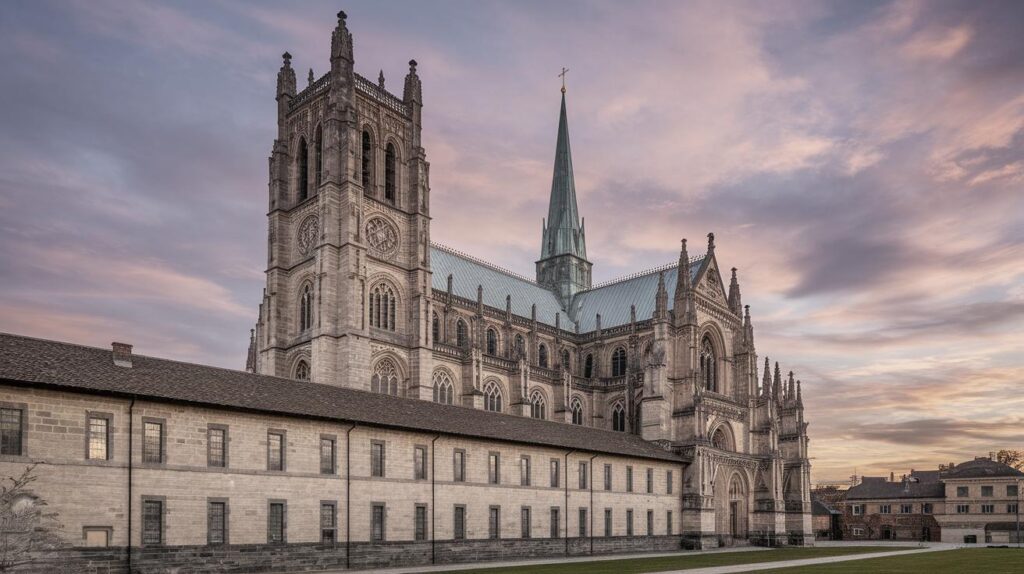
The Splendor and Significance of Medieval Cathedrals
Cathedrals in the Middle Ages stand as enduring monuments to the ingenuity and dedication of medieval society. These architectural feats were not merely religious edifices but pivotal cultural and social centers. This exploration delves into the practicalities of their construction, from the leadership and financing strategies to the labor force that translated ambition into reality. What motivated societies to embark on decades-long building projects? Beyond spirituality, cathedrals served as hubs for pilgrimage, social prestige, and expression of civic pride. Technological and architectural achievements were monumental, shaping Gothic architecture’s very essence. As we navigate through the best examples in Great Britain and explore further reading, you’ll uncover a tapestry of medieval life interwoven with the pursuit of grandeur and faith.
Leading & Financing the Construction
The construction of cathedrals was an ambitious enterprise requiring substantial financial resources and leadership. Such projects were typically spearheaded by influential figures, such as bishops or monarchs, who sought to glorify their cities and demonstrate the power of the church. These leaders had to secure funds from various sources, including church revenues, donations from wealthy patrons, and even tithes from local populations.
Fundraising often involved the establishment of guilds and societies dedicated to the cathedral’s completion. Pilgrimage relics, indulgences, and promises of prayers for benefactors were sometimes used as economic incentives to encourage donations. The financial and leadership commitment often ensured that the construction of these sacred spaces transcended generations, involving meticulous planning and unwavering dedication.
Labourers & Builders
The cathedral construction workforce was diverse and comprised various skilled and unskilled laborers. Master masons, architects, and experienced builders were pivotal, their intricate knowledge guiding the project’s success. These highly skilled craftsmen worked alongside a larger number of less specialized workers, including lime burners, mortar makers, and scaffolders.
Women and children also played roles, often tasked with carrying materials and performing supportive jobs. Quality of life for these laborers varied, but some were provided with food, shelter, and even wages. They worked in harsh conditions, illustrating the vast human effort and communal commitment behind these architectural wonders.
Stone Cutters and their Work
The art of stone cutting was a critical aspect of cathedral construction, with stone cutters being among the most renowned artisans of the time. The intricate carvings and gothic features seen in cathedrals today are a testament to their exquisite skill and creativity. These artisans often worked with locally-sourced stone, adapting their designs to the materials available.
Stone cutters relied heavily on templates and models to guide their work, ensuring each piece fit perfectly within the greater structure. The symmetry and structural integrity of the carved elements reflected the high level of precision and expertise developed by these craftsmen.
Why Did Medieval People Build Cathedrals?
Cathedrals were Spiritual and Religious Centres
Cathedrals served as the central locus for religious life in medieval communities. They were designed to inspire awe and devotion, with expansive naves and towering spires pointing heavenward. These spiritual centers were places where the church could conduct significant liturgical events and rituals, reinforcing the moral and religious order.
Cathedrals were Pilgrimage Sites
Many cathedrals attracted pilgrims who visited in devotion or search of divine intervention. They often housed relics or sacred objects believed to possess healing powers. This influx of pilgrims brought economic benefits to the cities, driving local economies and promoting growth and prosperity.
Cathedrals Gave Social Status and Prestige
Constructing a grand cathedral elevated the prestige of a city and its leaders. It was a symbol of wealth, dedication to faith, and civic pride. Cities with majestic cathedrals were perceived as sophisticated and cultured, attracting scholars, artisans, and the affluent.
Other Reasons
Besides spiritual and economic motives, cathedrals were built as educational centers. They hosted schools and their grand architectural designs sparked intellectual curiosity. They also strengthened community identity, serving as a central meeting place for all social strata.
The Architectural and Technological Achievement of Cathedrals
Cathedrals epitomized the architectural mastery and technological advancements of the Middle Ages. Gothic architecture, characterized by pointed arches, ribbed vaults, and flying buttresses, reached its zenith in these religious structures. The architectural ingenuity allowed builders to construct taller and more luminous edifices.
The advent of the flying buttress was crucial in counteracting the lateral forces pushing a wall outwards (allowing for enormous stained glass windows) and revolutionized structural engineering. Innovation was also evident in masonry techniques and the creation of flawless acoustics needed for liturgical chants.
The Best Cathedrals in Great Britain
Canterbury Cathedral (Canterbury, England)
Canterbury Cathedral, a UNESCO World Heritage Site, is one of the oldest and most famous Christian structures in England. It was founded in 597 AD and has a rich history, marked by its role as a place of pilgrimage following the martyrdom of Thomas Becket. Its Gothic architecture is inspiring, with the central tower, or Bell Harry Tower, being particularly renowned.
York Minster (York, England)
The York Minster, known for its magnificent stained glass and imposing Gothic structure, stands as a testament to medieval craftsmanship. Building began in the 13th century and continued for several hundred years, resulting in one of the largest cathedrals in Northern Europe. Its Great East Window is the largest expanse of medieval stained glass in the world.
St. Paul’s Cathedral (London, England)
St. Paul’s Cathedral, noted for its striking Baroque design, remains an iconic symbol of London. Although the original church dates back to 604 AD, it was rebuilt following the Great Fire of London. The cathedral’s massive dome is one of the largest in the world and its design has influenced many global structures.
Durham Cathedral (Durham, England)
Durham Cathedral is lauded for its Norman architecture and rugged beauty. Construction began in 1093, reflecting one of the earliest examples of large-scale stone vaulting. Its Romanesque style is mixed with some Gothic elements, and it serves as a resting place for St. Cuthbert.
Salisbury Cathedral (Salisbury, England)
Salisbury Cathedral boasts an impressive Early English Gothic style and possesses the tallest church spire in the UK. It also houses a remarkable copy of the Magna Carta. The balance of decoration and structural form remains a highlight of medieval architectural achievements.
Books about Medieval Architecture and Life
Delving into books about medieval architecture and daily life offers profound insights into the era’s cultural and technological mindset. Some outstanding works include “The Gothic Enterprise: A Guide to Understanding the Medieval Cathedral” by Robert A. Scott, which explores the history and motivation behind these grand edifices.
“Medieval Architecture: European Architecture 600-1200” by Nicola Coldstream provides a broader view on the architectural achievements of the period. For those interested in the intertwining of daily life and architecture, “Life in a Medieval City” by Joseph and Frances Gies paints a vivid portrait of urban life surrounding these grand structures.
More Medieval Architecture
Beyond cathedrals, medieval architecture encompasses castles, fortresses, and feudal manors scattered throughout Europe, each telling its own story of power and defense. Castles like the Tower of London and the fortified citadel of Carcassonne are remarkable for their defensive structures and aesthetic appeal.
Monasteries also played crucial roles in developing medieval architecture. Their cloisters and chapter houses were significant centers of learning and manuscript production. Medieval bridges and town walls further showcase the era’s engineering prowess, representing the practical needs of growing medieval towns.
Post navigation
Interested in further exploring the rich tapestry of medieval history? Navigate through additional posts exploring the daily lives of medieval citizens, castle architecture, and the evolution of medieval art and culture. Each post provides unique glimpses into the past, revealing the complexity and innovation that defined an age of faith and fortitude.
Final Thoughts
| Section | Key Points |
|---|---|
| Leading & Financing the Construction | Influential figures led these projects, securing funds through church revenues and community donations. |
| Labourers & Builders | A diverse workforce, including skilled masons and support laborers, participated in the construction. |
| Stone Cutters and their Work | Crucial to construction, stone cutters created intricate designs using locally sourced stone. |
| Why Did Medieval People Build Cathedrals? | Cathedrals served spiritual, economic, and social purposes, driving their grand construction efforts. |
| The Architectural and Technological Achievement of Cathedrals | Gothic architecture innovations, such as flying buttresses, facilitated these monumental buildings. |
| The Best Cathedrals in Great Britain | Highlights include Canterbury, York Minster, St. Paul’s, Durham, and Salisbury, each with unique features. |
| Books about Medieval Architecture and Life | Books provide deeper insight into architectural and cultural significance, such as works by Scott and Coldstream. |
| More Medieval Architecture | Includes castles, monasteries, and medieval bridges, showcasing the era’s diverse architectural landscape. |

