
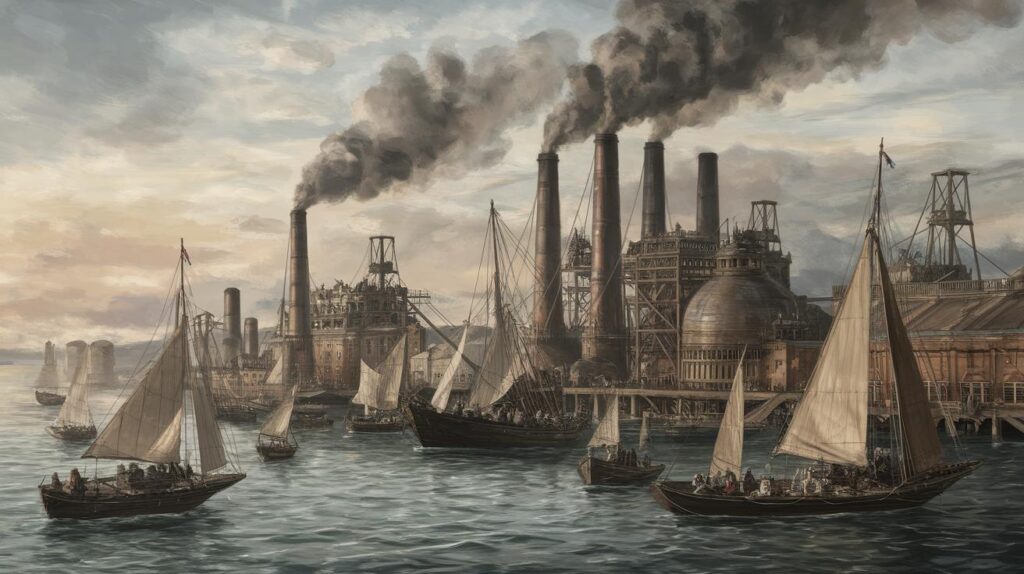
When Was the Industrial Revolution?
ARTICLE
The Industrial Revolution was a period of profound transformation, beginning in the late 18th century and continuing into the 19th century. It marked a shift from agrarian economies to industrialized and urban societies in Europe and North America, leaving a lasting impact on every facet of life. This blog post delves into the timeline and impact of the Industrial Revolution, examining it under various aspects. We’ll explore the grades or phases of the revolution, its influence on diverse subjects like society, economy, and technology, and provide related resources for further exploration. Join us as we journey through this pivotal moment in history, understanding both its origins and its enduring legacy on the modern world.
ARTICLE
Grades
The Industrial Revolution is often dissected into different “grades” or phases, which characterize the evolution of this transformative period. The First Industrial Revolution, roughly dated from 1760 to 1830, witnessed the transition from manual labor and agrarian economies to machine-based manufacturing. This period was marked by innovations like the steam engine, which played a critical role in mechanizing industries, including textiles and iron production. It also saw significant changes in transportation, with steamships and railways facilitating the movement of goods and people.
The Second Industrial Revolution, which began in the late 19th century and extended into the early 20th century, brought with it further technological advancements and social changes. This phase featured the widespread adoption of electricity, the introduction of chemical processes, and the dawn of mass production through assembly lines, famously demonstrated by Henry Ford’s automobile manufacturing. It also heralded the rise of telecommunications with the telegraph and telephone, greatly enhancing communication capabilities. Together, these phases laid the foundational stones for modern industrial society.
Subjects
The Industrial Revolution had far-reaching impacts that transcended various fields and subjects. Economically, it led to unprecedented growth and the establishment of new industries. Capitalism surged as entrepreneurs sought to capitalize on the potential of mechanized production, leading to shifts in global trade patterns and the rise of consumer economies. This economic boom, however, was not without its challenges, such as the increased concentration of wealth and the rise of labor movements advocating for workers’ rights in response to often harsh working conditions.
Socially, the Industrial Revolution transformed societal structures. Urbanization accelerated as people moved from rural areas to cities in search of employment in factories. This migration birthed new social dynamics and challenges, such as overcrowded living conditions and public health concerns. On the positive side, it also sparked advancements in education and welfare as society began grappling with the need to support an increasingly urban populace. The cultural landscape was also reshaped, as literature and art began reflecting the complexities and novelties of industrialized life.
Related Resources
For those interested in delving deeper into the Industrial Revolution, a myriad of resources are available for further study. Scholarly articles and books provide detailed analyses of this pivotal era. Works such as “The Rise of the Industrial Revolution” by Thomas S. Ashton offer comprehensive overviews of the economic and social transformations that occurred. Additionally, academic journals dedicated to history and economics frequently publish papers that explore specific aspects of this period.
Online platforms offer dynamic ways to explore the Industrial Revolution as well. Educational websites and digital archives house a wealth of primary sources, such as personal diaries, factory records, and legal documents, which provide firsthand insights into the daily lives and experiences during this era. Additionally, documentaries and video lectures available on sites like YouTube and academic institutions’ online portals provide visual narratives that illuminate the industrial era’s innovations and legacy. By engaging with these resources, learners and enthusiasts can further enrich their understanding of how the past continues to shape our modern world.
Final Thoughts
The Industrial Revolution was a cornerstone event that forged the path for modern industrial society. Its timeline reflects a progression from rudimentary mechanization to sophisticated industrial processes, each phase bringing its own set of innovations and societal implications. By examining the various grades and subjects related to this period, one gains a comprehensive perspective on how it redefined economic, social, and cultural landscapes. As we continue to explore and learn from these historical changes, the lessons drawn from the Industrial Revolution remain relevant, offering guidance and insight into current and future technological advancements.
| Topic | Key Points |
|---|---|
| Grades | Divided into phases: First Revolution (1760-1830) with steam and mechanization; Second Revolution (late 19th century-early 20th century) with electricity and mass production. |
| Subjects | Affected economy, society, technology. Economic growth, urbanization, cultural changes, and emergence of modern societal structures. |
| Related Resources | Includes scholarly articles, books, online archives, documentaries, and educational videos for further exploration. |

