
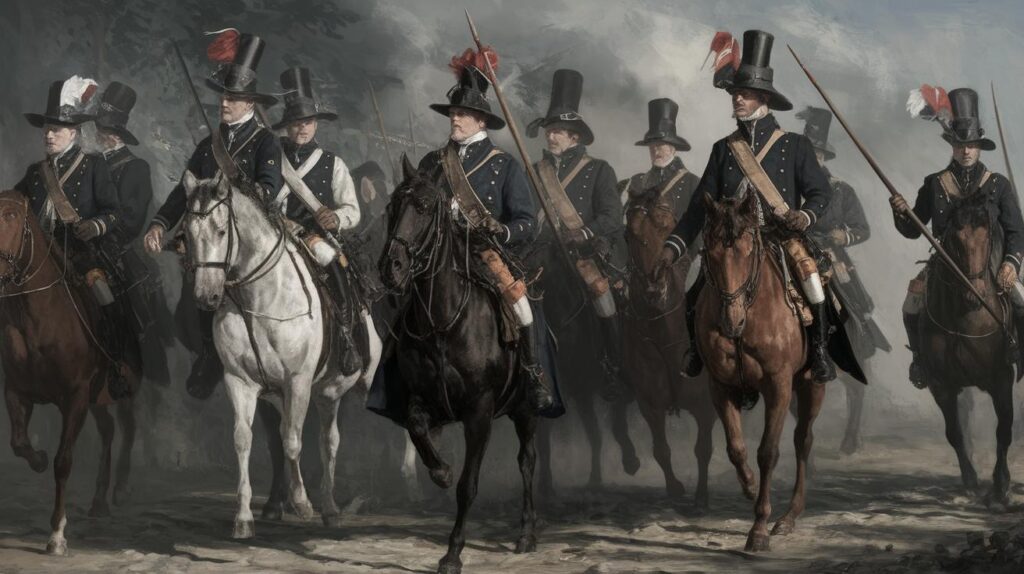
Understanding the Short Term Causes of the English Civil War
The English Civil War, a tumultuous period of conflict and change, was driven by various short-term causes rooted in the complex political, religious, and social fabric of 17th-century England. This blog post delves into the essential catalysts that sparked civil unrest, focusing on key events and decisions in the years leading up to the war. Exploring major elements such as the Personal Rule of Charles I, the Bishops’ Wars, and the consequential summoning of Parliament, we provide a structured analysis that unravels the nuances of this historical conflict. Join us as we examine these pivotal moments, enhancing our understanding of the factors that ignited one of the most significant internal struggles in English history.
Personal Rule and the Seeds of Rebellion (1629–40)
The period known as the Personal Rule of King Charles I represents a time of growing discontent and simmering rebellion. From 1629 to 1640, King Charles I ruled without Parliament, a decision that alienated many of his subjects. He implemented a series of unpopular financial measures, such as the forced loans and Ship Money tax, which drew widespread criticism. This approach strained the relationship between the monarchy and its subjects, sowing early seeds of rebellion as individuals grew increasingly resistant to what they perceived as arbitrary and autocratic rule.
Religious tensions also played a crucial role during this period. Charles I and his Archbishop of Canterbury, William Laud, introduced reforms that were seen as overly Catholic in nature, causing discomfort among the predominantly Protestant population. The imposition of the Book of Common Prayer in Scotland led to riots and contributed to the growing unrest. Many subjects felt their religious freedoms were under threat, fueling further opposition to the King’s policies.
The Bishops’ Wars and the Return of Parliament (1640–42)
The Bishops’ Wars, a defining conflict between Charles I and the Covenanters in Scotland, further escalated tensions. These wars, primarily over religious matters, emboldened opposition to the King. Charles’s defeat in the First Bishops’ War in 1639 and the Second in 1640 showcased his declining power and inability to govern effectively without the support of Parliament. Financial constraints forced Charles to summon the Short Parliament in April 1640, which was promptly dissolved within weeks due to persistent disagreements.
The ongoing strife necessitated the calling of the Long Parliament in November 1640, marking a crucial turning point in the events leading to the Civil War. The Long Parliament became a formidable force opposing the King, taking measures such as the impeachment of Charles’s key advisors. This period witnessed growing divisions between Royalists, who supported the King, and Parliamentarians, who opposed his methods, setting the stage for open conflict that would erupt into the English Civil War.
When did the English Civil Wars occur?
The English Civil Wars took place between 1642 and 1651. This period of warfare was primarily characterized by the conflict between the Royalists, loyal to King Charles I, and the Parliamentarians, who sought more power for Parliament. The wars occurred across three main stages in England, Scotland, and Ireland, leading to profound changes in the political landscape of Britain.
As tensions escalated through the early 1640s, the conflict officially began with the raising of Charles I’s banner in Nottingham in August 1642, signifying the start of hostilities. The subsequent years were marked by a series of battles and power struggles, ultimately ending with the execution of Charles I in 1649 and the temporary establishment of a Commonwealth under Oliver Cromwell.
What was the first major battle fought in the English Civil Wars?
The first major battle of the English Civil Wars was the Battle of Edgehill, fought on October 23, 1642. Located in Warwickshire, this battle marked the initial significant armed confrontation between the Royalist forces loyal to King Charles I and the Parliamentarian army commanded by the Earl of Essex. The battle ended inconclusively, with neither side able to secure a decisive victory.
However, the Battle of Edgehill was notable for its illustration of the growing polarization within the country, as both sides were evenly matched in strength and conviction. This early engagement set the tone for the ensuing conflict, with both Royalists and Parliamentarians mobilizing their forces for larger and more decisive battles.
How many people died during the English Civil Wars?
The English Civil Wars were a devastating conflict that resulted in significant loss of life. Estimates of the number of casualties vary, but it is generally acknowledged that around 200,000 to 250,000 people died as a direct result of the wars. This figure includes deaths from battles, sieges, and the famine and diseases that swept through the regions affected by the conflict.
The high death toll, particularly when considering the population size of the time, underscores the profound impact of the wars on the British Isles. The war not only decimated the population but also led to widespread social and economic disruptions, altering the course of English history.
When did the English Civil Wars come to an end?
The English Civil Wars concluded in 1651 with the Battle of Worcester on September 3rd. This decisive battle saw Oliver Cromwell’s New Model Army defeat the forces of Charles II, effectively ending the Royalist resistance. Charles II fled to continental Europe, and this victory marked the end of the third phase of the civil wars.
Following this, the Commonwealth was firmly established under the leadership of Oliver Cromwell, who became the Lord Protector. The monarchy was abolished until 1660 when the monarchy was restored with Charles II emerging as king. This period of Republican rule, though short-lived, had a lasting impact on England’s governance and constitution.
Summary of main points
| Events | Description |
|---|---|
| Personal Rule (1629–40) | Charles I’s rule without Parliament led to financial and religious tensions, setting the stage for rebellion. |
| Bishops’ Wars (1640–42) | Conflicts with Scotland showcased Charles’s weakened grip on power, culminating in the necessity of recalling Parliament. |
| English Civil Wars’ timeline | Occurred between 1642 and 1651, with significant battles and power struggles defining the period. |
| First major battle | Battle of Edgehill in 1642 marked the first major clash between Royalists and Parliamentarians. |
| Casualties | Estimated 200,000 to 250,000 people died due to battles, sieges, famine, and disease. |
| End of the wars | Concluded in 1651 with the Battle of Worcester, leading to a temporary establishment of the Commonwealth. |

