
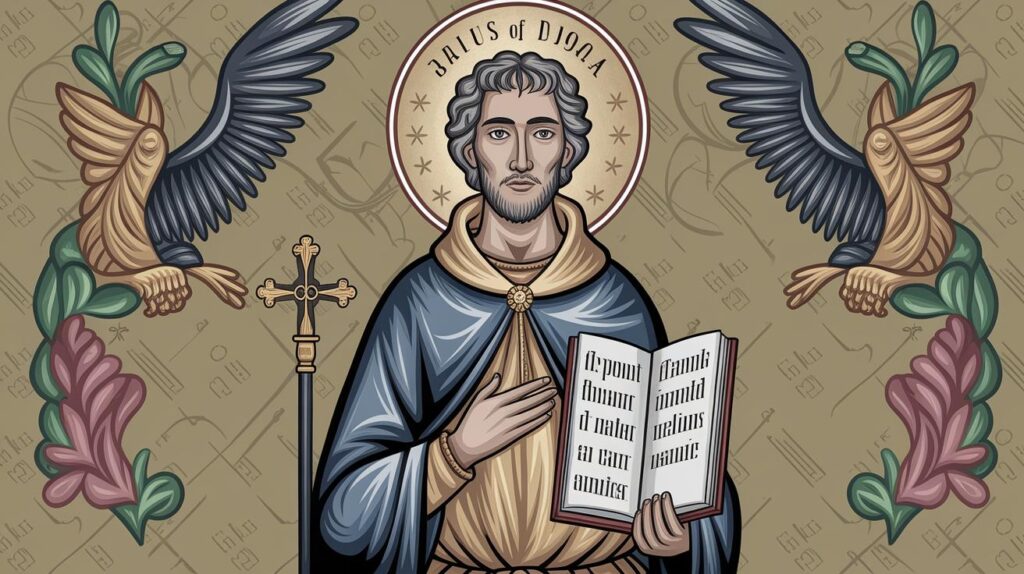
Ignatius of Loyola: A Defining Figure in World History
Ignatius of Loyola stands out as a monumental figure in world history due to his pivotal role in the Counter-Reformation and the founding of the Society of Jesus. This blog post delves into the remarkable journey of Ignatius, from his early beginnings as a nobleman to his profound spiritual conversion, his scholastic endeavors, and his creation of the influential “Spiritual Exercises.” We will explore how these elements collectively led to the establishment of the Society of Jesus, an organization that profoundly impacted global education and religious dialogue. With an intricate tapestry of personal evolution and unwavering faith, this narrative highlights how Ignatius’s legacy continues to thrive. Through the exploration of his life, we gain insight into the eras he molded and the indelible mark he left on the world.
Early Life
Born Íñigo López de Loyola in 1491 in the castle of Loyola in present-day Spain, Ignatius hailed from a distinguished family of minor nobility. His early years were marked by his aspirations for chivalric adventure, fueled by the ideals of the medieval romance literature that captured his youthful imagination. A fervent desire for glory and honor led him to partake in military service as a knight.
Ignatius’s upbringing instilled in him a deep loyalty to both his family and the Spanish crown. This phase of his life was largely defined by earthly ambitions, with little inclination towards spirituality or religious life. It was, however, the unfortunate event during the Battle of Pamplona in 1521, where Ignatius sustained severe injuries, that became the catalyst for profound personal transformation. During his convalescence, the foundations for what would become a significant spiritual awakening were laid.
Conversion
During his lengthy recovery, Ignatius found himself bedridden with limited access to the chivalric literature he adored. Consequently, he read the religious texts available to him, notably the “Life of Christ” and the “Lives of the Saints.” These readings sparked a deep introspection and re-evaluation of his life’s purpose, leading to an intense spiritual conversion.
Ignatius began to perceive his previous pursuits as superficial when contrasted with the serene devotion of the saints he read about. The introspections during this period are pivotal; they sowed the seeds of his spiritual tenets, igniting a desire to imitate the saintly lives he read about. Motivated by this newfound zeal, Ignatius dedicated his life to spiritual exploration and service to God, setting the stage for his profound impact on religious life and education.
Travels & Studies
Armed with newfound spiritual fervor and a desire to understand his faith more deeply, Ignatius embarked on a pilgrimage to the Holy Land. Although his plans to remain in Jerusalem were cut short by political conditions, the journey reinforced his resolve. Returning to Europe, Ignatius pursued formal education, first attending the University of Alcalá and later the prestigious University of Paris.
At the University of Paris, Ignatius proved to be an influential figure, forming key relationships with individuals who would later become integral to the Society of Jesus, such as Francis Xavier and Peter Faber. Despite challenges such as his lack of formal preparatory education and financial difficulties, Ignatius’s dedication to learning was relentless. His academic and spiritual pursuits during this period laid the essential groundwork for his later work in theology and pedagogy.
The Spiritual Exercises
One of Ignatius’s most enduring contributions to Christian spirituality is his compilation known as the “Spiritual Exercises.” Developed through years of reflection and personal spiritual experiences, these exercises are designed as a retreat that guides individuals through a structured form of spiritual contemplation and prayer.
The “Spiritual Exercises” emphasize discernment, self-awareness, and union with God’s will, offering practitioners a methodology to examine their lives through the lens of Christ’s teachings. This transformative tool has transcended its original ecclesiastical boundaries, influencing numerous spiritual traditions and laying the foundation for Ignatius’s educational and theological endeavors. The exercises continue to serve as a spiritual lifeline for Jesuit priests and countless laypeople seeking a deeper spiritual life.
The Society of Jesus
In 1534, Ignatius and six companions, including those he met in Paris, took vows of poverty, chastity, and obedience, formalizing their commitment to religious service and intellectual engagement. This moment marked the genesis of the Society of Jesus, commonly known as the Jesuits, which received official approval by Pope Paul III in 1540.
The Society of Jesus quickly became a formidable force in the Counter-Reformation, focusing on education, missionary work, and the spreading of Catholic doctrine. The order’s members, known for their intellectual rigor and deep commitment to their spiritual and educational goals, founded colleges and universities across Europe. Ignatius’s leadership and vision for scholarly pursuit and spiritual richness helped align the Society’s mission with global Catholic principles, cementing its influence in both historical and contemporary contexts.
Final Thoughts
Ignatius of Loyola’s life is a compelling testament to the power of transformation through faith and determination. From a soldier chasing worldly glory, his journey led to founding a religious order that has had a lasting impact on global education and spiritual development. Through the “Spiritual Exercises” and the Society of Jesus, Ignatius’s legacy lives on, inviting individuals from all walks of life to seek greater depth and purpose in their personal and communal endeavors.
| Section | Summary |
|---|---|
| Early Life | Exploration of Ignatius’s noble beginnings and military aspirations. |
| Conversion | Ignatius’s transformative period of religious awakening during recovery. |
| Travels & Studies | Journeys and academic pursuits that shaped Ignatius’s theological perspective. |
| The Spiritual Exercises | Development and impact of Ignatius’s contemplative guide for spiritual life. |
| The Society of Jesus | Founding of the Jesuits and their historical role in education and reform. |

