
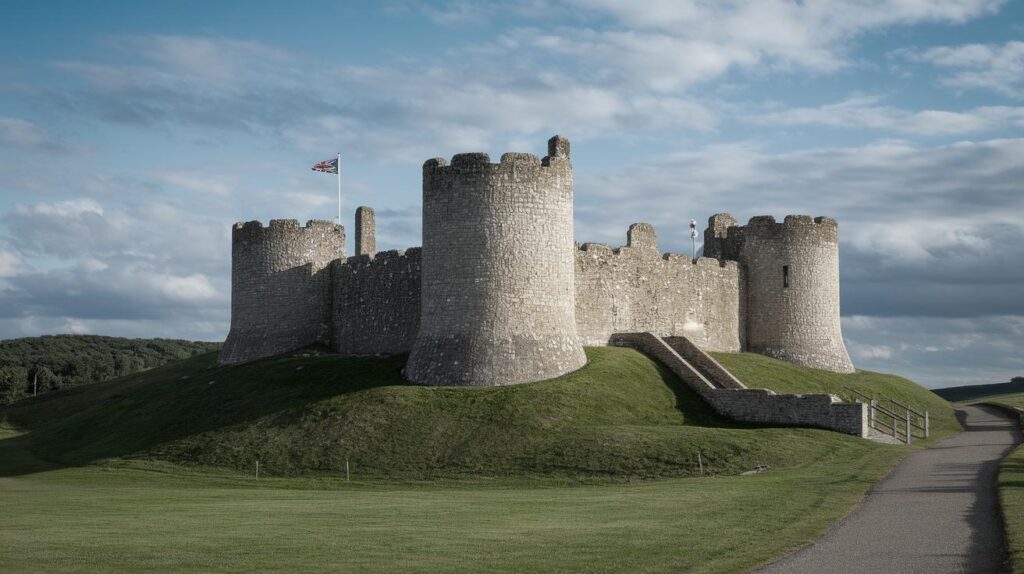
Exploring the Historical Significance of Motte and Bailey Castles
Motte and bailey castles are iconic symbols of medieval fortification, representing both the strategic ingenuity and the rapid construction capabilities of the era. Emerging primarily in the 10th and 11th centuries, these castles were pivotal in medieval warfare and governance. This blog post delves into the critical choices made in site selection, the quick fortification process, the construction methods employed, and the distinct functionalities of the motte and bailey components. By understanding these elements, we gain insight into the architectural and military advances of the time and appreciate the enduring legacy of these formidable structures.
Choosing a Site
The selection of a site for a motte and bailey castle was a strategic decision that considered both defensive benefits and the surrounding geography. Usually, a site with natural defenses like hills, cliffs, or rivers was preferred to enhance protection and visibility. Such locations not only offered a natural advantage but also required lesser resources and effort in constructing additional defensive structures.
Additionally, proximity to important roads, trade routes, and existing settlements was crucial, ensuring the castle played a key role in governance, commerce, and mobility. The site’s accessibility to water resources was also a determining factor, as it was essential for sustaining the castle’s occupants and their livestock.
Building Fortifications Quickly
The speed of construction was a defining feature of motte and bailey castles, which was crucial during times of unrest and invasion. Utilizing readily available materials like earth, timber, and stone enabled rapid development, allowing a strong defensive position to be established quickly. This rapid deployment was pivotal in consolidating power in territories with unstable political climates.
Additionally, the design itself facilitated quick building. The simplicity of the motte—a mound topped with a wooden or stone keep—and the relatively straightforward bailey made it possible to construct a formidable fortification in weeks rather than months, a distinct advantage over more complex stone castles.
Construction
The construction process began with the creation of the motte, which involved heaping soil to form a large, steep mound. Its height and steepness varied, but it was always designed to be defensively advantageous. Timber palisades and a keep typically crowned the motte, further enhancing its defensive capability.
The bailey, enclosed by a protective ditch and palisade, provided a space for living quarters, workshops, and stables. Its perimeter was fortified with wooden or stone walls, ensuring additional security. Together, the motte and bailey formed a comprehensive defensive structure capable of withstanding sieges.
How a Motte and Bailey Castle Functioned
The Bailey
The bailey was the economic and social heart of the castle. It housed essential facilities and structures, including the barracks for troops, workshops for craftsmen, stables for horses, and storage areas for food and resources. This open area allowed the community to thrive while ensuring protection within its fortified walls.
During attacks, the bailey served as the first line of defense. The garrison could quickly mobilize to protect or retreat to the motte if necessary. The bailey’s layout was designed for efficiency in both day-to-day operations and emergency scenarios, making it a vital component of the castle’s defense system.
The Motte
The motte played a critical role as the final stronghold within the castle. Its elevated position provided a vantage point for surveillance and defense. The keep on top served as both a residence for the lord and a place of refuge during sieges, often equipped with additional defensive structures, such as turrets and battlements.
In the event of an assault, the motte was the last line of defense. The steep incline and elevated position made it difficult for attackers to breach. This strategic advantage enabled defenders to maintain a tactical superiority even against larger forces, ensuring the survival of its inhabitants.
Final Thoughts
| Aspect | Description |
|---|---|
| Choosing a Site | Strategic locations with natural defenses, proximity to roads, and accessibility to resources were chosen. |
| Building Fortifications Quickly | Use of local materials and simple design allowed rapid construction, crucial for defense and power consolidation. |
| Construction | Involved building the motte with a keep on top and creating a fortified bailey with essential facilities. |
| The Bailey | Served as the economic and social center with living and work spaces, contributing to the defensive strategy. |
| The Motte | Provided a stronghold during sieges, with its high vantage point and additional defensive measures. |

