
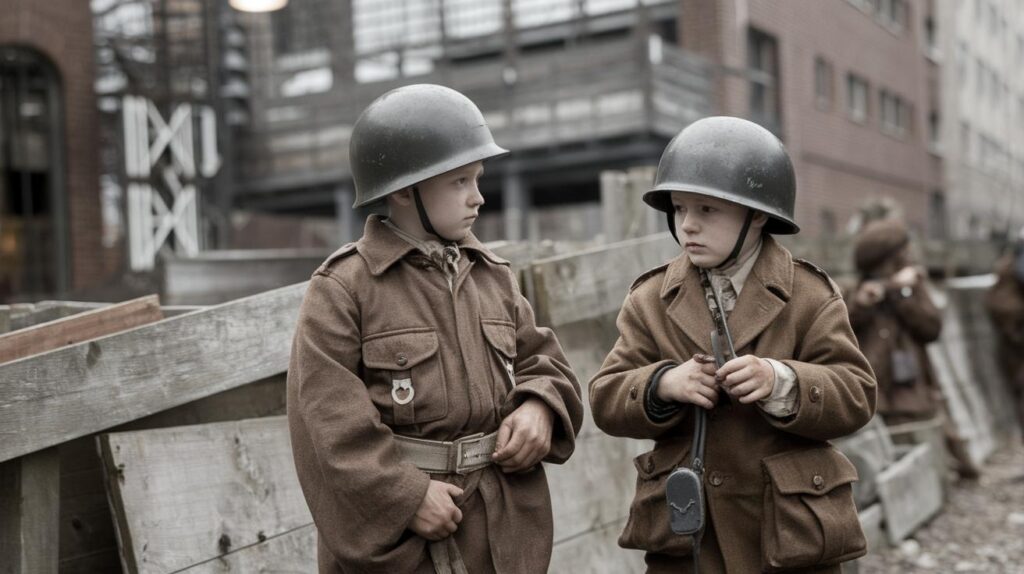
Children in World War II
World War II was a profoundly disruptive period, not only affecting soldiers on the frontlines but also millions of civilians. Among these, children were some of the most vulnerable and impacted. As victims of wartime aggression and genocidal policies, countless children were forced into a brutal reality that altered their lives forever. This article explores the varied experiences of children during the Holocaust, those within Nazi-occupied territories, non-Jewish children, and the impact on young lives during and after the war. It aims to shed light on their stories of suffering, survival, resistance, and hope, while also prompting readers to engage with critical thinking questions that will deepen their understanding of this harrowing time in history.
Series: Children during the Holocaust
The Holocaust was one of the darkest chapters in human history, and children were not spared from its horrors. Jewish children were among the primary targets of the Nazi regime, which sought to eradicate Jewish existence in Europe. The persecution of children began with enforced segregation from society, stripping them of their rights to education and normalcy.
The trauma inflicted on these young minds was unimaginable; many were separated from their families, experiencing fear, hunger, and deprivation on a daily basis. Some were hidden by those who risked their own lives, while others faced deportation and extermination in concentration camps.
Series: Victims of the Nazi Era
The Nazi regime’s campaign of terror did not only focus on Jewish children. Millions of children from various ethnic backgrounds, including Romani, Polish, and Soviet, as well as those with disabilities, were caught in the crossfire of Nazi barbarism. Their futures were irreparably shattered by systemic violence and racism.
These children faced forced labor, starvation, and for many, the ultimate horror of death. Sadly, their stories are less frequently told, but they remain a crucial part of understanding the full impact of the Nazi ideology. Efforts to remember all victims are vital for preserving the dignity of those lost and educating future generations.
Series: Anne Frank
Anne Frank is perhaps the most well-known child diarist of World War II. Her accounts provide a deeply personal and poignant insight into the life of a Jewish child hiding from Nazi persecution. The Diary of a Young Girl chronicles her years in hiding with her family in Amsterdam until their arrest in 1944.
Anne’s words have resonated through history, shedding light on both the seemingly ordinary and the extraordinary challenges children faced during the war. Her legacy continues to inspire conversations about resilience and the importance of empathy and understanding amid adversity.
Key Facts
Throughout the Holocaust, approximately 1.5 million children perished. They were victims of brutal policies that viewed them as obstacles to the Nazi vision for Europe. Whether targeted due to their ethnicity or religious background, these children suffered the consequences of fanatical ideology.
Various relief organizations, although working under immense pressure, attempted to save those at risk. From 1933 to 1945, numerous rescuers risked their lives, smuggling children to safety, forging identification documents, and providing hiding places.
In the Ghettos
Life in the ghettos was a struggle for survival. Deprived of basic necessities, children and their families lived in cramped, unsanitary conditions that bred disease and despair. In some ghettos, clandestine schools operated, attempting to maintain a semblance of education behind walls of oppression.
The Warsaw Ghetto, among others, presented scenes of unimaginable hardship. Children often worked as couriers, smugglers, or messengers, risking their lives to support their families. Despite the dire conditions, many showed remarkable resilience, forming support networks to bolster each other as best they could.
In the Killing Centers
The term “killing centers” painfully encapsulates the fate that awaited numerous children deported from ghettos. These centers were designed explicitly for mass extermination, mainly impacting Jewish, Romani, and disabled children. Upon arrival, most were killed in gas chambers.
Sobibor, Treblinka, Auschwitz, and Belzec are synonymous with the systematic murder that took place. Records describe horrific scenes wherein children witnessed the deaths of their loved ones. These places stand as eternal reminders of inhumanity’s depths and the children’s lost futures.
In Concentration and Transit Camps
Concentration and transit camps served as gateways to the killing centers or forced labor. Children here faced extreme brutality, starvation, unsanitary living conditions, and constant fear. The separation from families and deplorable conditions led to high mortality rates among the youngest inmates.
Camp survivors recount stories of sibling care, where older children took on parental roles. Despite dire circumstances, some camps saw efforts at clandestine education and cultural exchange, acts of defiance that sustained hope amidst suffering.
In Occupied Poland and the Occupied Soviet Union
In occupied regions like Poland and the Soviet Union, children faced atrocities reflective of the brutal occupation policies. Many were involved in forced labor, severely impacting their physical and mental health. Their schools were often closed, depriving them of education and subjecting them to indoctrination.
Resistance movements in these areas sometimes included children who played minor yet crucial roles. They faced the same harsh penalties as adults upon capture, displaying remarkable bravery and resilience in the face of overwhelming adversity.
Non-Jewish Children
Throughout Nazi-occupied Europe, non-Jewish children, especially those of Slavic origin or from political dissident families, were also targeted. These children faced forced displacement, Germanization efforts, and traumatic disruptions to their lives and communities.
The Lebensborn program, designed to increase Aryan birth rates, led to the kidnapping of suitable children for assimilation into German families. Consequently, these children suffered identity erasure, losing their cultural roots and familial connections.
Resistance and Rescue
While World War II represented a time of extreme peril, it also sparked profound examples of courage and humanity. Numerous individuals and organizations dedicated themselves to the rescue and protection of children, often at great personal risk.
Figures like Oskar Schindler and networks like the French Jewish Scouts orchestrated plans to save thousands of lives, including children. Their efforts, underscored by great moral conviction, remain testimonies of resistance against tyranny and the power of individual action.
After the War
The post-war period was fraught with challenges as surviving children struggled with profound physical and emotional traumas. Rehabilitation efforts were initiated to help these young survivors rebuild their lives, though the scars of war were long-lasting.
Reuniting families often proved difficult, and many children discovered that they were orphans. Organizations such as the United Nations Relief and Rehabilitation Administration played key roles in locating relatives and facilitating adoptions or new home placements.
Critical Thinking Questions
1. How did the experiences of children during World War II differ across various regions and communities?
2. In what ways do the stories of child survivors shape our current understanding of wartime atrocities and resilience?
See Also
– Diaries of Children in the Holocaust
– The Role of Education in Wars
– Psychological Impact of War on Children
Related Links
–
United States Holocaust Memorial Museum
Glossary Terms
–
Ghetto:
Segregated, confined area where Jews were forced to live.
–
Killing Centers:
Facilities for mass murder through efficient, systematic means, primarily gas chambers.
Future Prospects
| Category | Content Summary |
|---|---|
| Children during the Holocaust | Explores Jewish children’s experiences, including separation from families and hiding. |
| Victims of the Nazi Era | Discusses non-Jewish children affected by Nazi oppression, including Romani and disabled children. |
| Anne Frank | A look into Anne Frank’s life and the impact of her diary. |
| In the Ghettos, Killing Centers, Camps | Examines conditions and experiences of children in these locations. |
| Occupied Territories | Highlights children’s lives in occupied Poland and the Soviet Union. |
| Non-Jewish Children | Details the adversity faced by non-Jewish children under Nazi rule. |
| Resistance and Rescue | Covers efforts to save children during the war, showcasing human courage. |
| After the War | Focuses on the rehabilitation and challenges faced by surviving children. |

